When you rent, the railing is sacred. Your landlord sees a drill hole and your deposit walks out the door.
But a railing is also exactly what you need to anchor a garden that produces real food. This is how I’ve built mine without touching the lease.
What you’re working with
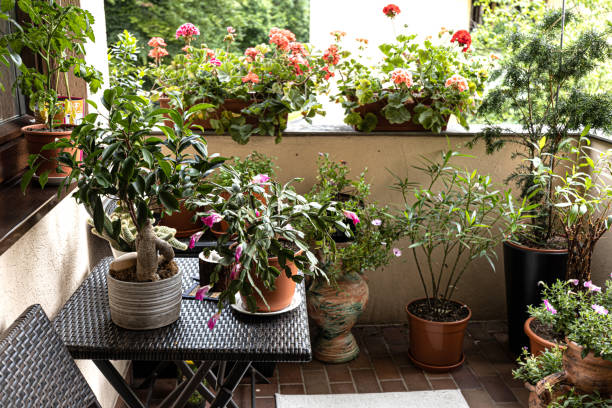
My balcony is about 6m² on the fifth floor of a Berlin apartment building. It gets solid south-facing sun from about 9am to 4pm in summer, wind that can genuinely flatten things, and a railing that I need to hand back in the same condition I found it.
The setup I’ve landed on is three months of trying things, breaking them, and ordering what actually held up.
The core constraints
Weight matters. A wet 40-litre planter weighs about 45kg. The railing has limits. You’re not going to break it, but you’ll sense the load on it pretty quickly. Spread weight across multiple points instead of piling everything on one section.
Wind is real. Upper-floor gusts don’t feel dangerous until something tips over. I’ve watched a whole planter go horizontal at 2am. The taller the setup, the more wind it catches. I learned this twice before it stuck.
Access matters. You need to water things. If the setup is awkward, you’ll skip watering. If you skip watering, nothing grows. Make it easy to reach and move things around.
The no-drill solutions that actually work
Railing clamps
These are my workhorse. A clamp bolts around your railing — no drilling, no permanent marks. You can adjust them, move them, take them off entirely.
I use a two-clamp setup down one side of the railing. Each holds a planter securely even in wind, and the whole thing comes off in about 30 seconds if the landlord drops by.
Field notes: The cheaper clamps have plastic screws that strip after one adjustment cycle. Spend the extra €5–10 for metal screws. You’ll adjust things. A lot.
Hooks and S-hooks for hanging
Hanging from the railing spreads the load differently than mounting on top of it. Heavy-duty S-hooks (rated for at least 20kg each) clipped around the railing hold hanging baskets or macramé plant hangers without any fastening.
The key is decent rope or macramé. Thin rope cuts into your hands when you’re adjusting things, and weak knots fail at 2am when you find everything on the ground.
Freestanding structures
A lot of the vertical real estate on my balcony comes from a simple bamboo ladder leaned against the wall and secured at the top with a bungee cord to the railing. No drilling, nothing permanent, and it holds pots on each step.
This works because wind can’t flip it (it’s against the wall) and the railing secures it at the top. I’ve had this setup through two winters. It’s stable and looks intentional, not jury-rigged.
Weight distribution strategy
You want multiple layers, not one dense cluster. That means:
- Bottom level: Heaviest, most stable pots on the ground or on a low shelf
- Mid level: Medium pots on a shelf unit or the bamboo ladder
- Top level: Lighter hanging baskets or small pots
This spreads the load across the railing clamps, the wall mounting points, and gravity itself.
Field notes: I initially piled everything on one clamp-mounted shelf. It held, but I could feel it flex in wind. Spreading across three separate mounting points made everything feel solid and reduced the anxiety about windy nights.
Securing against wind
Height makes things top-heavy. A tall tomato in a 40-litre pot will catch wind. I’ve tried three approaches:
- Shorter varieties: Determinate tomatoes and bush varieties tip less than indeterminate ones
- Stakes and ties: Lashing plants to stakes anchored in the pot adds stability
- Windbreaks: A transparent windbreak panel (no drilling — it rests against the railing) cuts wind speed significantly
The windbreak is the most useful. It looks like a fence, doesn’t actually block the view, and cuts the force of gusts enough that things stop flopping around.
Seasonal adjustments
Summer is straightforward: everything’s out, everything’s growing. Autumn, you start thinking about winter.
In October, I move things away from the north wall (it gets shaded earlier) and consolidate toward the south-facing section. By November, I take the non-hardy stuff down, leave the winter greens and microgreens, and pull out anything that won’t survive freezing.
The spring reboot is just the reverse: clear the old stuff, bring out the summer setup, and start over.
What holds vs what doesn’t
Holds:
- Railing clamps with metal fasteners
- Heavy-duty S-hooks on proper rope
- Bamboo ladder against a wall
- Gravity (pots on the ground don’t blow over)
Doesn’t hold:
- Cheap clamps with plastic fasteners (they strip)
- Wire or thin rope (it cuts and snaps)
- Top-heavy tall structures without wind mitigation
- Anything in direct upper-floor gusts without a windbreak
The real test
I’ve left this setup running through a Berlin winter. Wind, rain, occasional snow, the works. The railing is exactly as I found it. The landlord has no idea how much food I’ve grown here.
That’s the whole point of no-drilling: a garden that doesn’t leave evidence.